
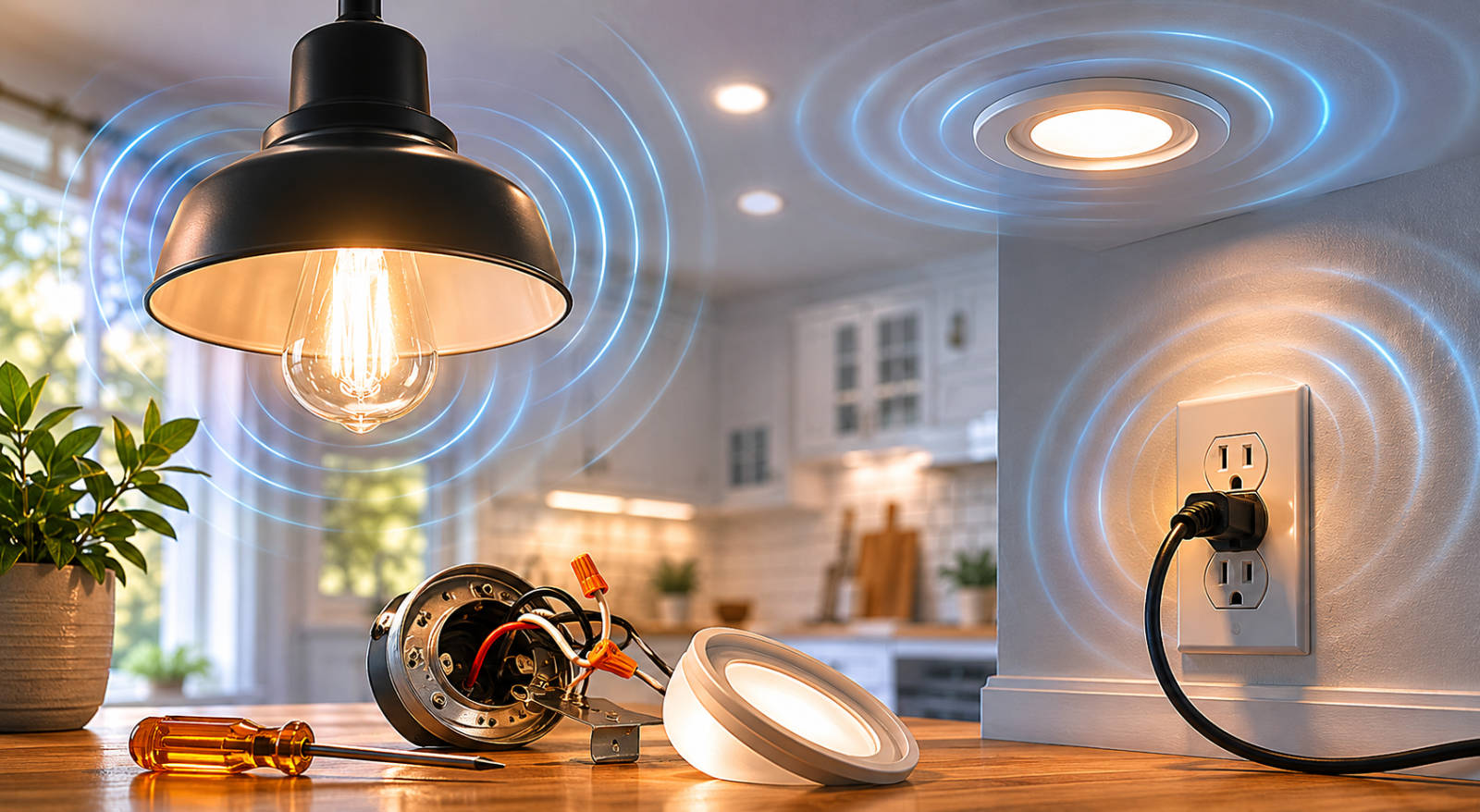
Most homeowners expect electrical problems to look dramatic. Flickering lights. Sparks. Power outages. Burn marks around an outlet.
But in reality, many electrical issues start much more quietly than that.
A faint buzz from a light switch. A low hum behind a wall. A soft vibration coming from the panel in the basement. These kinds of electrical humming sounds are easy to brush off because they don’t feel urgent. The house still has power. Nothing has stopped working. Life carries on.
The problem is that sound is often the first warning sign that something inside your electrical system is beginning to fail.
In many cases, that quiet humming noise is your home trying to tell you there’s a loose connection, overloaded circuit, failing breaker, or another issue developing behind the scenes. Catching it early can mean the difference between a simple repair and a much larger safety problem later on.
What Causes Electrical Humming Sounds?
Electricity itself is generally silent. If you’re consistently hearing buzzing, humming, crackling, or vibrating noises from fixtures or outlets, there’s usually a reason for it.
Some causes are relatively minor. Others can point to serious loose wiring hazards that should be inspected quickly.
A few of the most common causes of electrical humming sounds include:
- Loose electrical connections
- Overloaded circuits
- Aging outlets or switches
- Faulty breakers
- Incompatible dimmer switches
- Improperly installed fixtures
- Transformer vibrations
- Wiring deterioration in older homes
In some situations, the sound comes from electricity “jumping” across a loose connection. In others, it’s caused by vibration from electrical current moving through worn or failing components.
Homeowners dealing with buzzing outlets in Langley homes often discover the issue traces back to older wiring systems, aging electrical panels, or renovations that were added onto existing electrical work over the years. Even homes that appear modern on the surface can still have older electrical components hidden behind the walls.
Now a landscape-oriented image for this section.
Why Loose Wiring Hazards Are More Serious Than They Sound
Loose wiring hazards are one of the most common causes of electrical humming sounds, and they’re also one of the biggest reasons electricians take buzzing seriously.
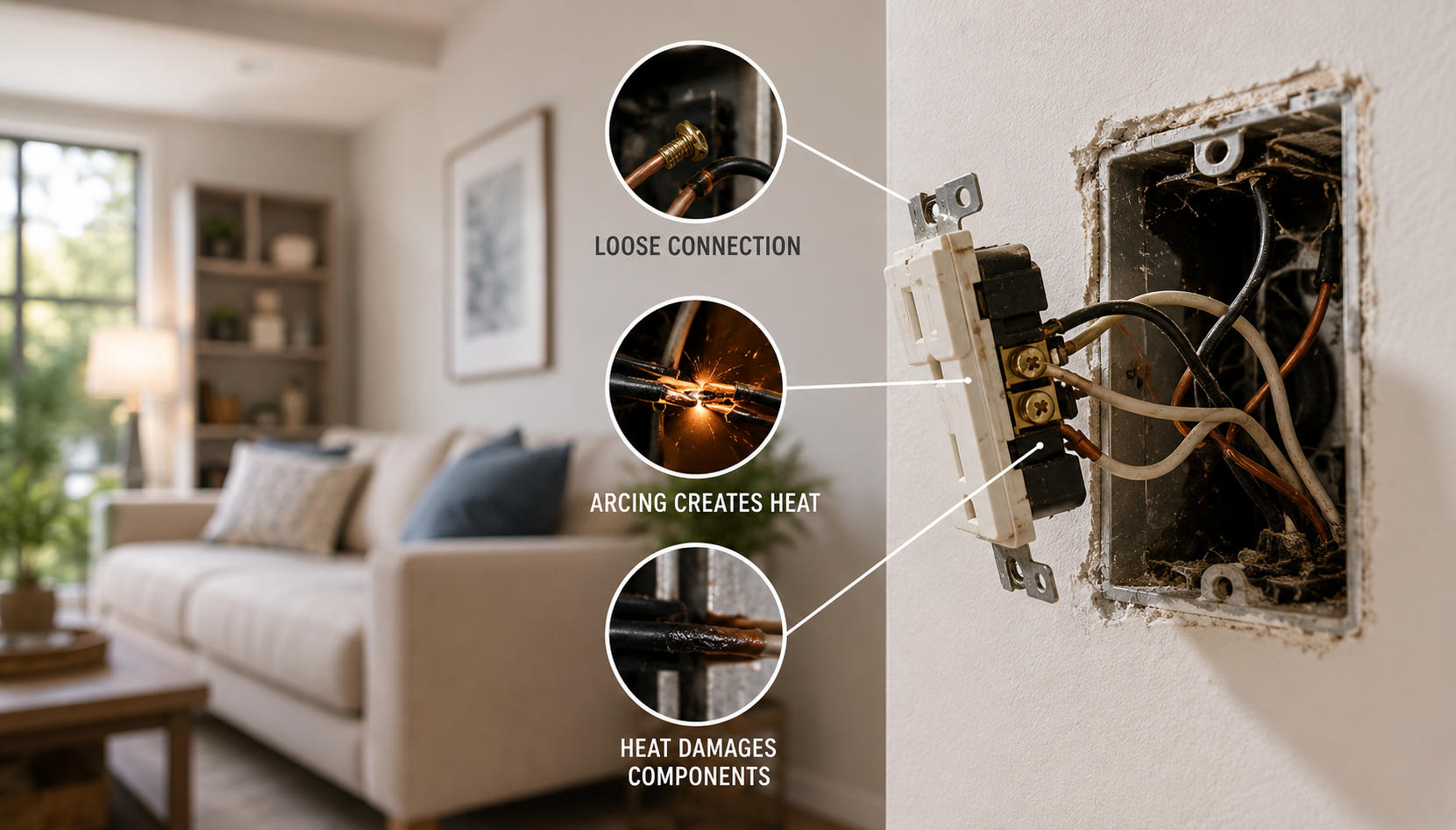
When electrical connections loosen over time, resistance builds up at the connection point. Resistance creates heat. Heat damages components. As the damage grows, electricity may begin “arcing,” which means it starts jumping through the air between connections instead of flowing cleanly through the wiring.
That arcing process can generate buzzing, humming, or crackling sounds.
The concern is that this often happens inside walls, ceilings, fixtures, or electrical panels where homeowners can’t actually see the damage developing. By the time visible signs appear, the problem may already be significant.
This doesn’t mean every buzzing outlet is an emergency, but it does mean electrical noises should never simply be ignored indefinitely.
Many electrical fires start from exactly these types of small connection failures that worsen gradually over time.
Common Places Homeowners Notice Buzzing or Humming
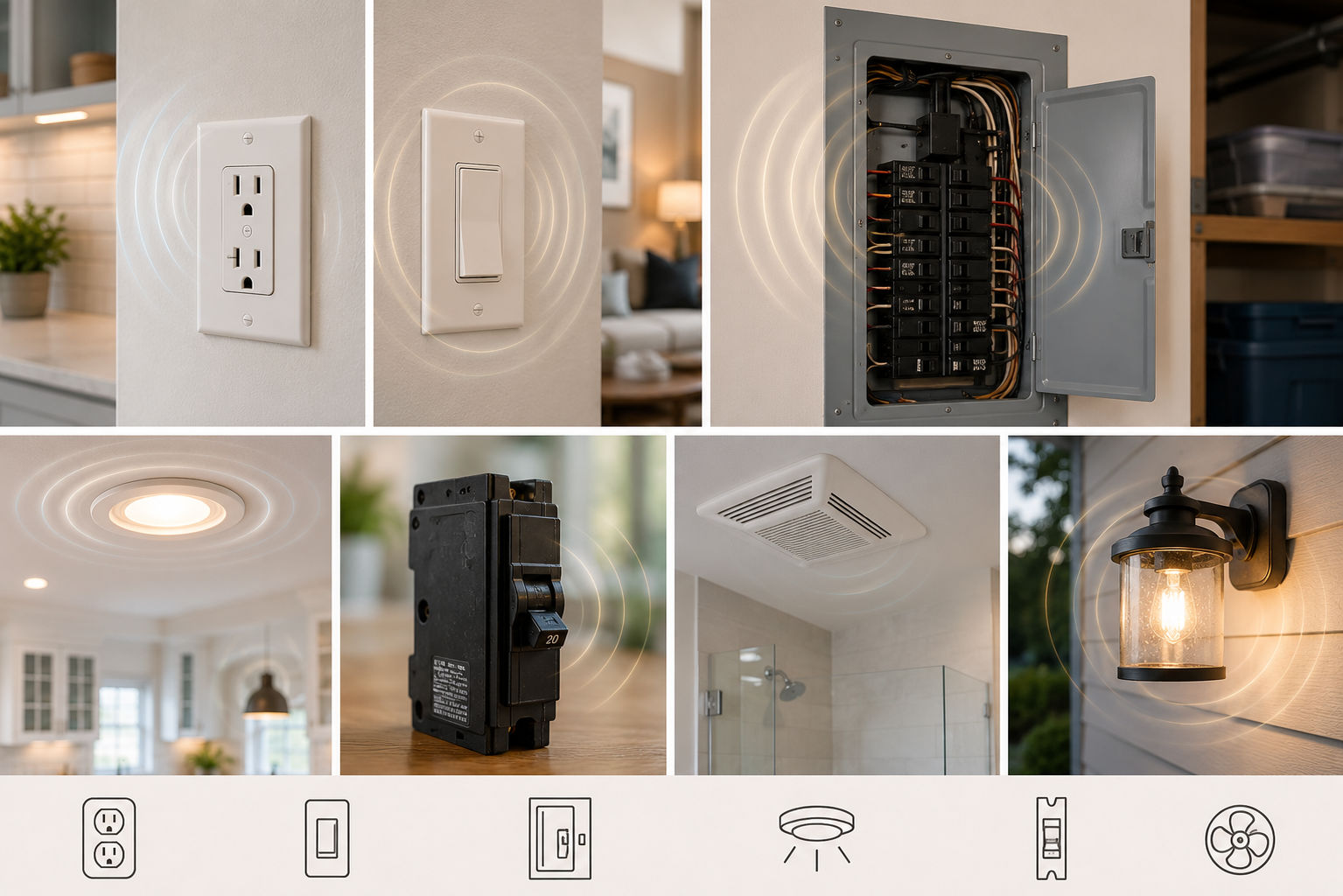
Electrical humming sounds can show up in almost any part of a home’s electrical system, but there are a few places where homeowners tend to notice them most often.
Outlets and Switches
A buzzing outlet or humming light switch usually points to loose wiring, worn components, or overloaded circuits. This is especially common in older homes.
Electrical Panels
Panels naturally produce a slight operational hum sometimes, but loud buzzing, crackling, or vibration should always be inspected.
Ceiling Fixtures
Loose fixture connections, incompatible LED dimmers, or aging wiring can all create humming noises overhead.
Breakers
A humming breaker can indicate overload issues or internal failure within the breaker itself.
Bathroom Fans and Exterior Fixtures
Moisture exposure can accelerate wear on electrical components and create buzzing or humming over time.
Homeowners dealing with buzzing outlets in Langley homes often delay getting them checked because the issue seems small or inconsistent. Sometimes the sound disappears temporarily, which creates a false sense that the problem resolved itself.
Unfortunately, intermittent electrical problems are often the hardest ones to predict safely.
Why DIY Electrical Troubleshooting Can Make Things Worse
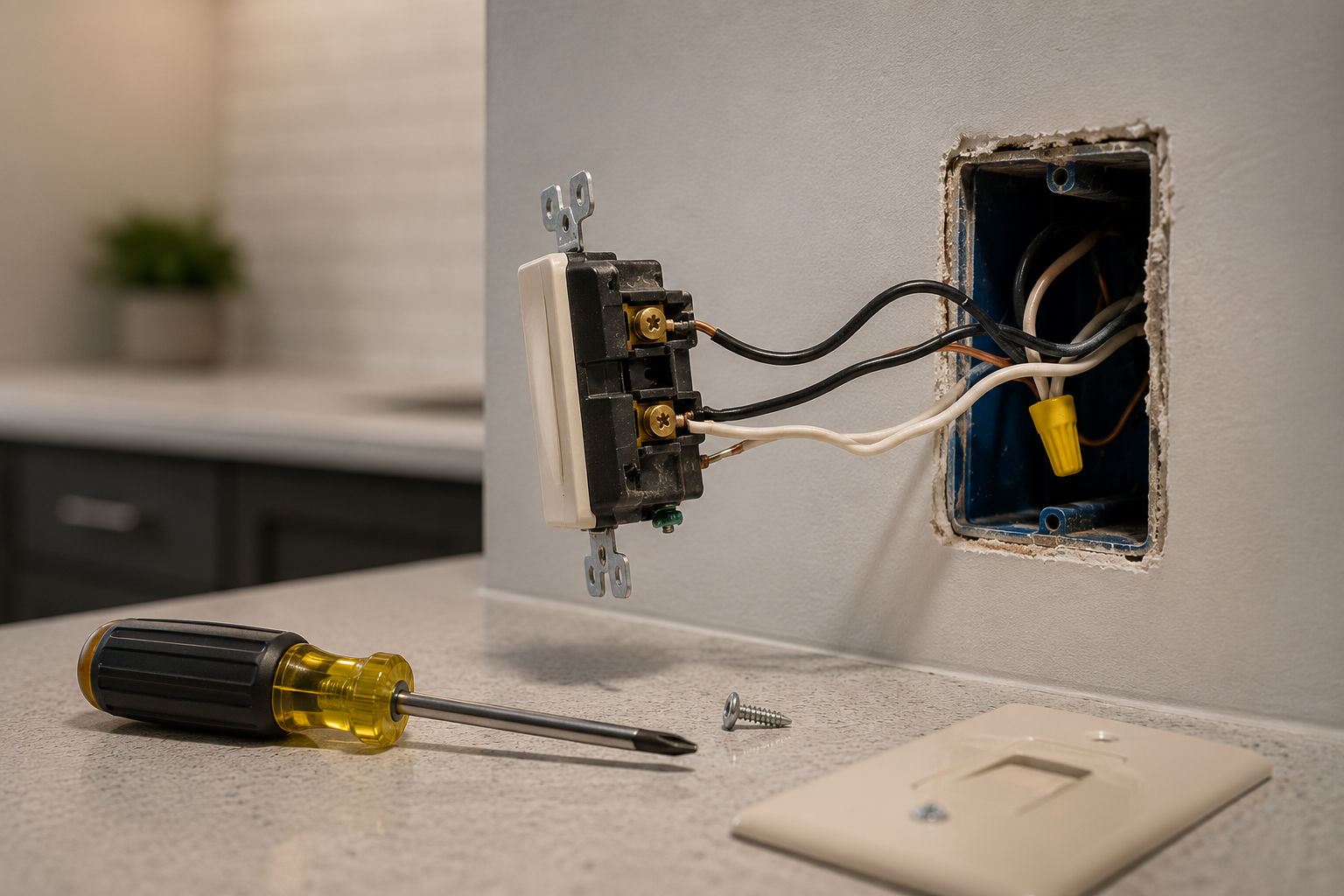
When homeowners hear buzzing or humming, the natural instinct is often to investigate personally. Maybe tighten an outlet. Swap a switch. Reset a breaker and hope for the best.
The challenge is that electrical systems are interconnected, and the visible symptom is not always where the actual issue originates.
For example, a humming light fixture may actually trace back to a loose connection elsewhere on the circuit. A buzzing outlet may be connected to panel issues or overloaded wiring that isn’t obvious from the outside.
Electrical troubleshooting also carries risk because shutting off one breaker does not always eliminate every potential hazard in the area being worked on.
In some cases, DIY repairs temporarily stop the noise while the underlying problem continues worsening behind the walls.
That’s why professional troubleshooting matters. The goal is not just to silence the symptom. It’s to identify the actual cause safely and thoroughly.
What Oakwest Electric Looks For During Troubleshooting
When Oakwest Electric investigates electrical humming sounds, the focus is on finding the root issue rather than applying a temporary patch.
That process may include checking for:
- Loose electrical terminations
- Heat-damaged wiring
- Circuit overloads
- Improper grounding
- Aging breakers
- Aluminum wiring concerns
- Incorrect dimmer compatibility
- Panel capacity problems
- Improperly installed fixtures
- Signs of moisture intrusion
Electrical troubleshooting is often less about dramatic repairs and more about careful investigation. Small issues caught early are usually much easier, safer, and less expensive to resolve than problems left to develop over time.
That calm, methodical approach is especially important in homes where renovations, additions, or older electrical systems may have created layers of electrical work over several decades.
Don’t Ignore the Quiet Warning Signs
Most people don’t think much about their electrical system until something stops working entirely. But many problems announce themselves long before that happens.
A quiet buzz. A faint hum. A strange vibration that wasn’t there before.
Those electrical humming sounds may seem minor, but they’re often your home’s first indication that something needs attention.
The good news is that many electrical issues are straightforward to repair when they’re identified early. Having a professional inspect unusual sounds can provide clarity, peace of mind, and a safer home overall.
If something in your home doesn’t sound right, trust your instincts. Electrical systems are supposed to work quietly.
Hearing Buzzing, Humming, or Crackling Somewhere in Your Home?
Oakwest Electric helps homeowners across Langley safely diagnose and resolve electrical issues before they become bigger problems. If your home is making unusual electrical noises, it’s worth getting it checked properly.