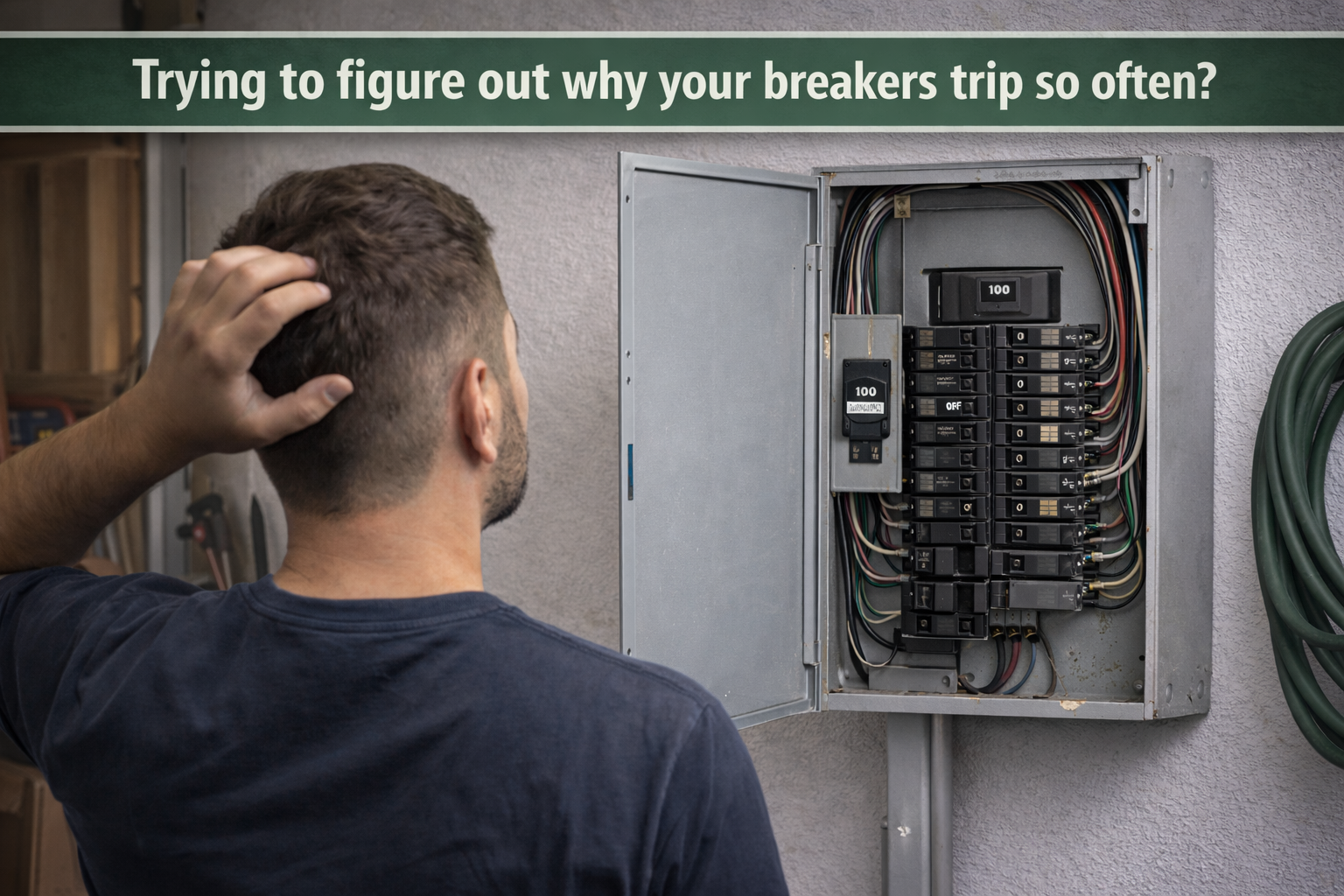
Why does my circuit breaker keep tripping? And is it just a minor inconvenience, or could it be a sign of a larger electrical problem in your home?
Breaker trips are one of the most common electrical issues homeowners experience. While an occasional trip can happen when too many devices run at once, repeated breaker trips usually indicate something deeper within the electrical system.
By the end of this article, you’ll understand why circuit breakers trip, what the most common causes are, and when it’s time to have a licensed electrician investigate the issue.
What a Circuit Breaker Actually Does
Circuit breakers are designed to protect your home from electrical overloads and potential fire hazards. When too much electrical current flows through a circuit, the breaker automatically shuts off power to prevent wires from overheating.
In simple terms, a breaker acts as a safety switch for your electrical system.
According to BC Hydro’s electrical safety guidelines, breakers and other protective devices are designed to interrupt electrical flow when dangerous conditions are detected.
If a breaker trips occasionally, it’s usually doing exactly what it was designed to do. However, frequent trips often indicate an underlying issue that needs attention.

Overloaded Circuits
The most common cause of a tripping breaker is circuit overload. This happens when too many appliances or devices draw power from the same circuit at the same time. Kitchens, bathrooms, and living areas with multiple electronics are especially prone to overload.
Common signs of an overloaded circuit include:
- Breakers tripping when multiple appliances run
- Lights dimming when large appliances start
- Warm outlets or switches
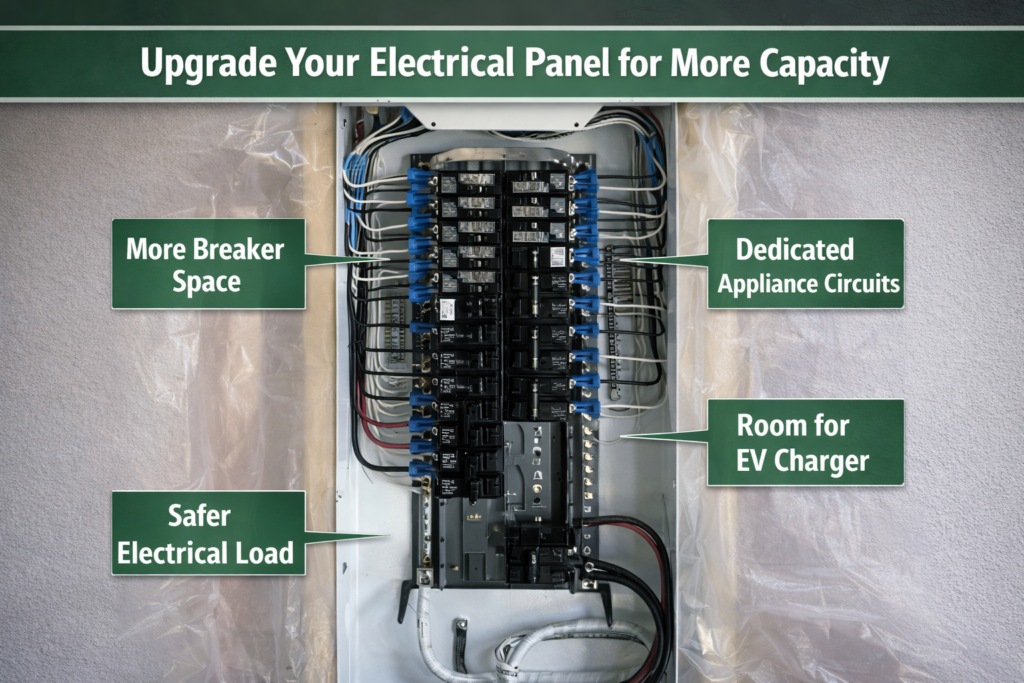
If overloads occur regularly, your home may need additional circuits or increased electrical capacity. In many cases, upgrading your electrical panel can provide the extra capacity modern homes require. Oakwest Electric performs professional panel and service upgrades that safely expand a home’s electrical capacity.
Short Circuits
A short circuit occurs when a hot wire touches a neutral wire or another conductor, allowing electricity to travel along an unintended path. When this happens, current rises rapidly and the breaker trips immediately.
Short circuits can be caused by:
- Damaged wiring
- Faulty appliances
- Loose electrical connections
- Aging electrical components
Because short circuits can generate significant heat, they can become a serious fire risk if left unresolved. For more information on electrical system safety, Technical Safety BC provides guidance on electrical safety standards for homes and businesses across the province
Ground Faults
Ground faults are similar to short circuits but involve electricity flowing to ground through unintended paths, such as metal boxes, water pipes, or appliance housings.
These faults are more common in areas where moisture is present, including:
- Kitchens
- Bathrooms
- Garages
- Outdoor outlets
Ground faults are the reason many outlets in these areas use GFCI protection, which shuts off power almost instantly when abnormal current flow is detected.
Outdated Electrical Panels
Sometimes the breaker itself isn’t the real problem. The issue may be that the electrical system is operating near its maximum capacity.
Older homes with 100-amp service were designed for much lower electrical demand. Today’s households often run multiple high-powered devices simultaneously, including:
- Heat pumps or air conditioning
- Electric ranges and dryers
- EV chargers
- Home office equipment
When demand regularly approaches the limits of the electrical panel, breakers may trip more frequently.
When to Call a Licensed Electrician
If your breaker trips occasionally during heavy electrical use, the solution may be simple. But certain situations require professional evaluation.
You should have your system inspected if:
- Breakers trip repeatedly
- A breaker will not reset
- You notice burning smells near the panel
- Lights flicker frequently
- Your panel is older or nearing capacity
A licensed electrician can perform a proper assessment and determine whether the issue is related to wiring, appliances, or the overall electrical service.
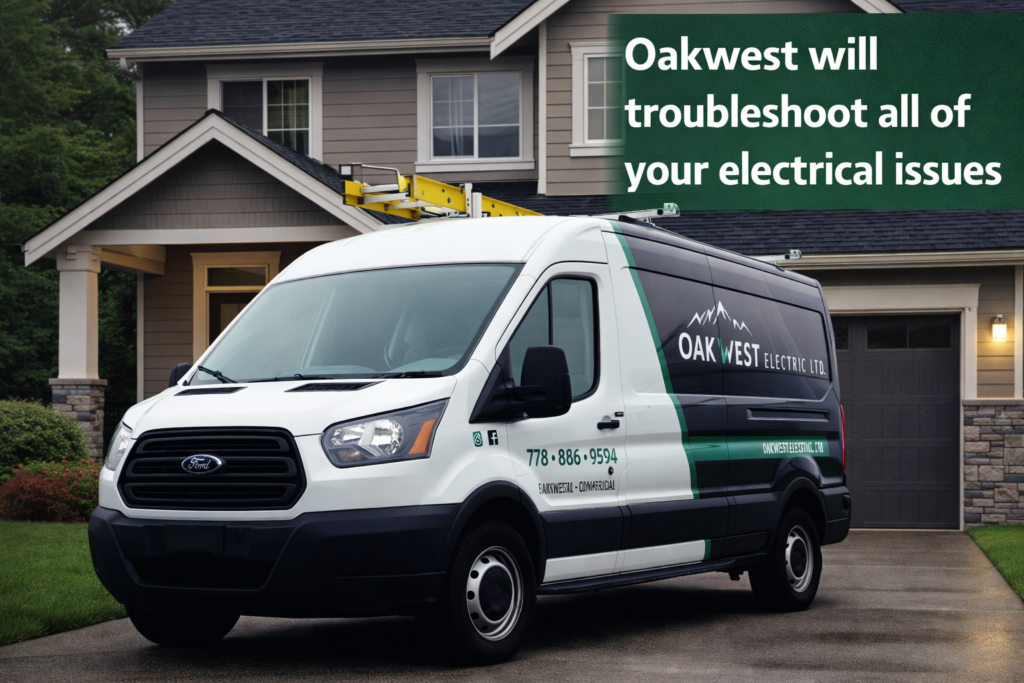
Oakwest Electric Can Help Diagnose the Problem
Persistent breaker trips are often a warning sign that your electrical system needs attention. Addressing the issue early can prevent larger problems and ensure your home remains safe and reliable.
Oakwest Electric provides electrical troubleshooting, panel upgrades, and system assessments throughout Langley and the Fraser Valley. If your breaker keeps tripping or your panel may be nearing capacity, contact us today to schedule an inspection and get clear answers about your electrical system.