Do you need a service upgrade to install an EV charger? And is it always required, or only in certain situations? By the end of this article, you’ll know when an EV charger can fit into your existing electrical system and when upgrading your service becomes the safer, more reliable choice. Let’s look at how EV charging actually impacts your home’s electrical capacity.
How EV Chargers Affect Your Home’s Electrical Load
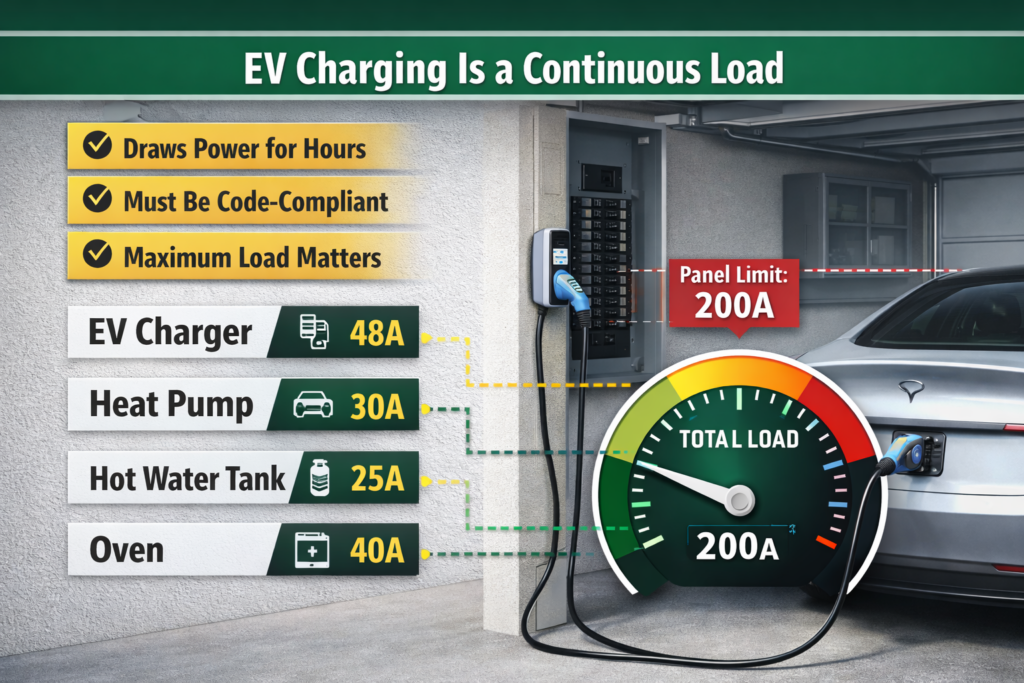
A Level 2 EV charger is one of the most convenient upgrades a homeowner can make — but it’s also one of the most demanding. Unlike most appliances that cycle on and off, an EV charger draws a steady load, often for several hours at a time. This continuous demand places sustained pressure on your electrical system.
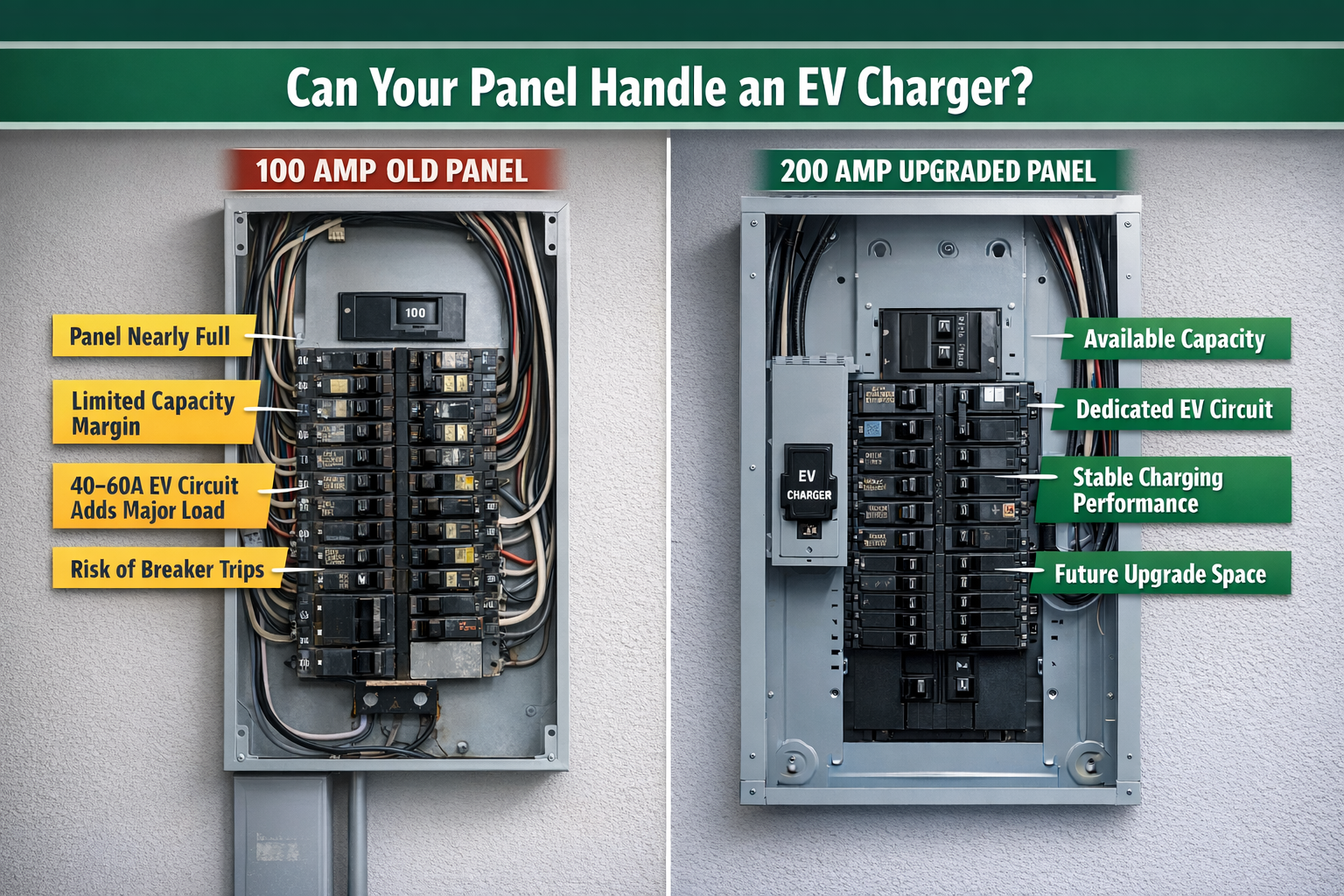
Most Level 2 chargers require a dedicated 40- to 60-amp circuit. When you add that to your home’s existing demands — heating, cooling, hot water, kitchen appliances, laundry, and outdoor equipment — panel capacity becomes critical. Even if everything rarely runs at once, the electrical code requires your system to safely support the maximum potential load.
That’s why the size of your service — 100 amps vs. 200 amps — plays such a major role in determining whether a charger can be added without upgrades.
When a 100 Amp Service Reaches Its Limits
Many older homes in Metro Vancouver still operate on 100-amp service. For decades, this was more than enough. But modern homes consume far more electricity than they once did. Heat pumps, air conditioning, hot tubs, electric fireplaces, and high-efficiency appliances all increase total load.
When you add an EV charger to a 100-amp system, potential issues include:
- Breaker trips during peak usage
- Overheating circuits or panels
- Limited room for future upgrades
- Reduced charging reliability
This doesn’t automatically mean a 100-amp home can’t support EV charging. It means the margin for error is much smaller. That’s why a proper load calculation is essential before making a decision. BC Hydro is a great resource for understanding EV charging requirements.
When a 200 Amp Service Is Usually EV Ready
Most newer homes are built with 200-amp service because today’s electrical demands are higher. In many cases, a 200-amp panel has enough capacity to support a Level 2 charger without major changes.
These homes often offer:
- More available breaker space
- Greater flexibility for high-demand appliances
- Better long-term capacity for future electrical demands
However, a 200-amp service is not an automatic guarantee of EV readiness.
When Even a 200 Amp Service May Not Be Enough
Some homes — especially larger properties or those with multiple high-demand features — can push even a 200 amp system close to its limits.
Capacity-impacting features include:
- Hot tubs (40–60 amp circuits)
- Swimming pools with heaters and pumps
- Electric heating systems
- Air conditioning or heat pumps
- Secondary suites
- Workshops with welders or compressors
In these situations, a panel may have physical space for another breaker but lack sufficient overall capacity. That’s why a professional load assessment matters — it evaluates actual usage patterns and maximum demand, not just breaker count. This is why customers across the Lower Mainland trust Oakwest to properly assess their EV charging needs.
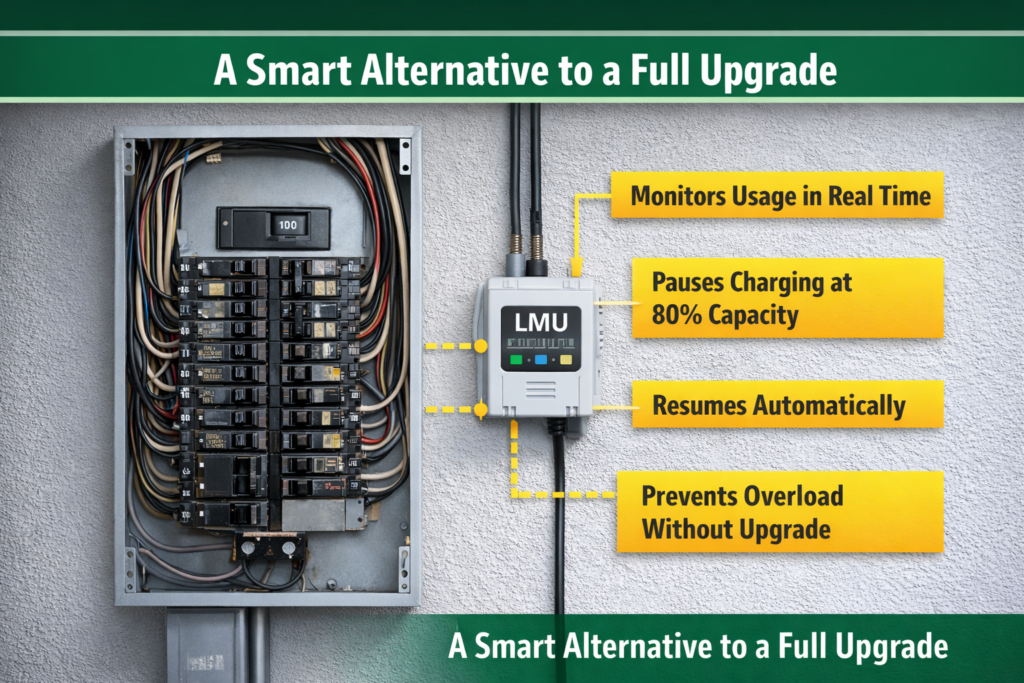
Load Management Devices: An Alternative for 100 Amp Homes
If your home has 100-amp service and you want to avoid a full upgrade, load management technology can provide a practical middle ground.
Two common options are:
Load Management Units (LMUs)
These monitor electrical usage in real time. If demand approaches 80% of capacity, the device temporarily pauses EV charging. Once usage drops, charging resumes automatically.
Automatic Transfer Switches
These allow two high-demand appliances to share a circuit, ensuring only one operates at a time.
These solutions are typically more affordable than a full-service upgrade and work well for homeowners with moderate electrical demand. However, they don’t increase total capacity — they simply help you operate safely within your system’s limits.
Why a Service Upgrade Is Often the Best Long-Term Choice
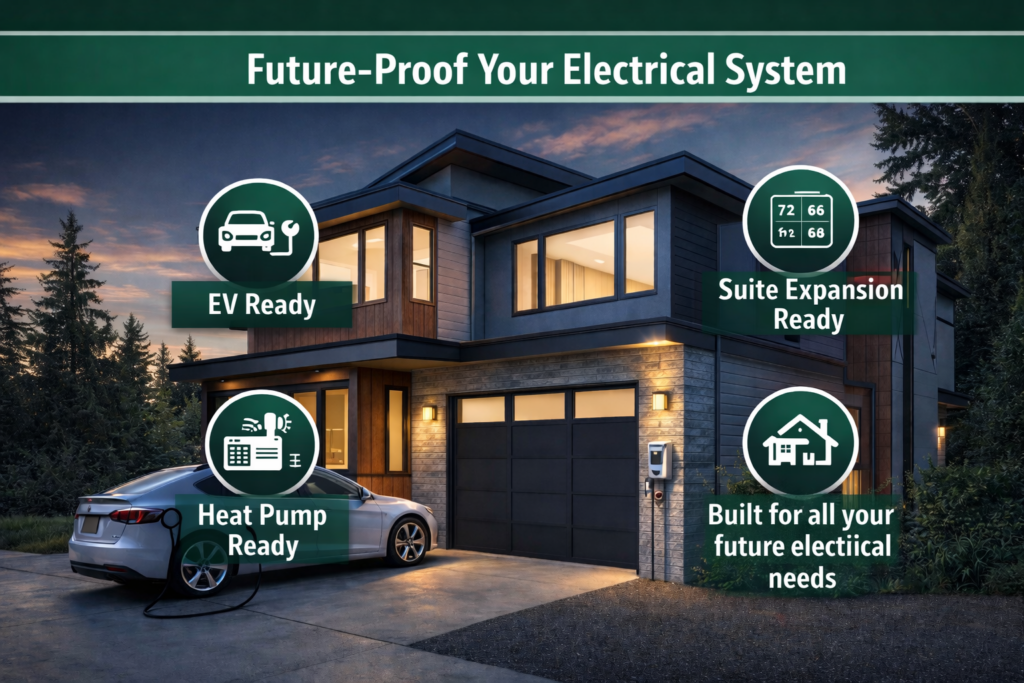
Even if load management works today, many homeowners eventually outgrow 100-amp service — and sometimes even 200-amps. As homes become more electrified, reliable high-capacity infrastructure becomes increasingly important.
Upgrading to 200 amp or higher service offers:
- Improved safety with modern equipment
- More circuits and expansion flexibility
- Greater reliability during peak demand
- Future-proofing as electrical demand accelerates
- Increased home value, especially for EV-ready buyers
For many homeowners, upgrading now prevents repeated electrical work later and ensures the home can support future additions.
How to Know What Your Home Actually Needs
As Technical Safety BC indicates here, the only way to know for sure whether your home can support an EV charger without a service upgrade is to have a licensed electrician perform a load assessment. This evaluation considers:
- Panel size
- Existing circuits
- Major appliances
- Heating and cooling systems
- Future renovation or upgrade plans
From there, you’ll know whether your home can support a charger as is, whether load management makes sense, or whether a full service upgrade is the safest and most reliable option.
Oakwest Electric Can Help You Choose the Right Path
Oakwest Electric performs detailed load assessments, explains your options clearly, and installs EV chargers, load management devices, and full-service upgrades throughout Metro Vancouver. Whether your home is older, newly built, or somewhere in between, we help you choose the safest, most cost-effective solution for your electrical system. Contact us today to get started.