It’s easy to assume you’re covered.
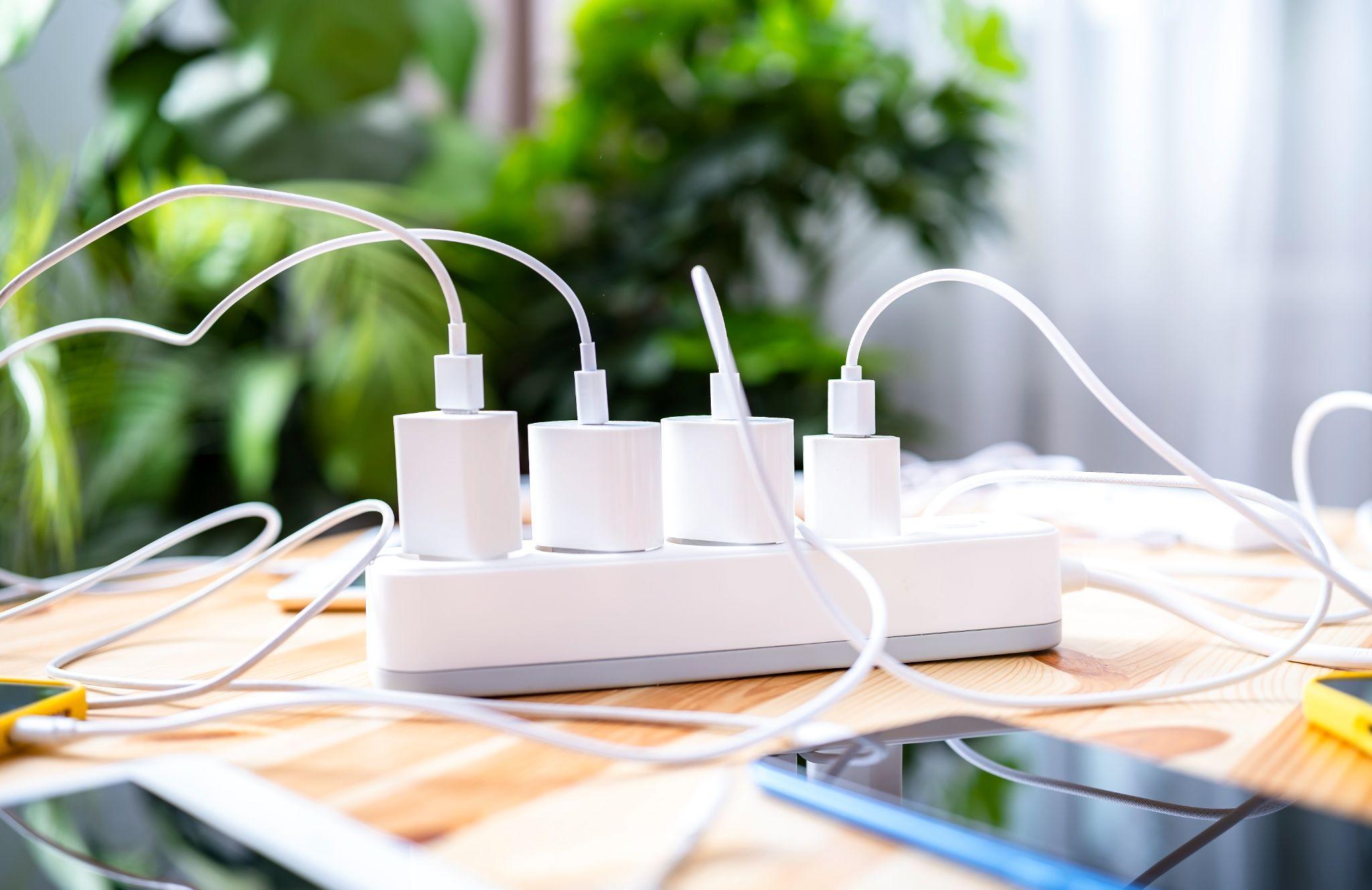
You plug your TV, computer, or entertainment setup into a power strip, maybe one with a little “surge protection” light on it, and it feels like you’ve done the responsible thing. Box checked.
And to be fair, power strips do help, just not in the way most people think.
They’re designed to handle small, localized spikes in voltage. The kind of minor fluctuations that happen inside your home. But they’re not built to deal with bigger surges coming from outside, and they don’t protect anything that isn’t plugged directly into them.
Meanwhile, homes today are packed with more sensitive and expensive electronics than ever before. Large TVs, smart appliances, home office setups, security systems, heat pumps. A lot of what you rely on daily is quietly exposed.
If you’re in the Lower Mainland, there’s another layer to consider. Between changing weather patterns, growing electrical demand, and shared infrastructure in dense neighbourhoods, your home is more exposed to power fluctuations than you might expect.
That’s where the conversation shifts from “some protection” to “actual protection.”
What Is a Power Surge, and Why Does It Happen?
At its simplest, a power surge is a sudden spike in electrical voltage.
Your home is designed to run on a consistent flow of electricity. When that flow jumps unexpectedly, even for a fraction of a second, it can stress or damage anything connected to your system.
Some surges are dramatic, like a lightning strike nearby. Those are rare, but when they happen, the damage can be significant.
More often, surges are smaller and happen more frequently. They can come from the utility grid switching operations, power being restored after an outage, or even from within your own home when large appliances cycle on and off.
Think about your fridge compressor kicking in, your HVAC system starting up, or a heat pump adjusting output. These normal operations can create small internal surges that add up over time.
In the Lower Mainland, where weather shifts, wind events, and heavy usage periods are common, these fluctuations tend to happen more often than people realize. You might not see them, but your electronics feel them.
Why Power Strips Don’t Fully Protect Your Home
Power strips have their place. They’re useful, convenient, and absolutely worth using.
But they’re only one small piece of the picture.
Most power strips provide basic surge suppression with a limited capacity. Once they absorb a certain amount of energy, their effectiveness drops, often without any obvious sign. That little indicator light doesn’t always tell the full story.
More importantly, they only protect the devices plugged directly into them. Everything else in your home is still connected to your electrical system without that buffer.
That includes your panel, your wiring, and all of your hardwired systems.
Your fridge, your stove, your washer and dryer, your garage door opener, your security system, your heat pump. None of those are running through a power strip.
So while your TV might have some level of protection, the rest of your home is still wide open.
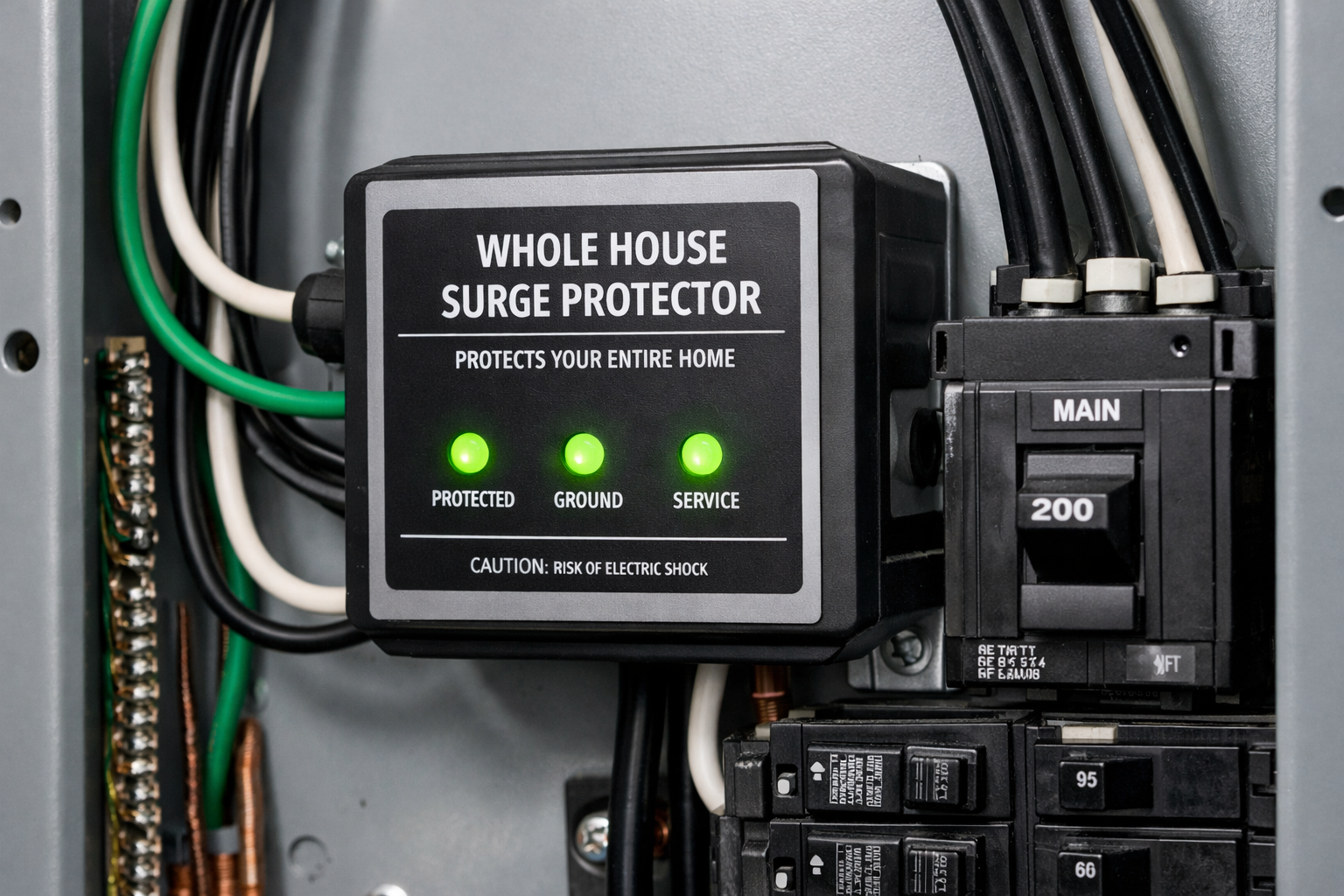
What Is Whole-Home Surge Protection?
Whole-home surge protection is exactly what it sounds like. Instead of protecting a few outlets, it protects your entire electrical system.
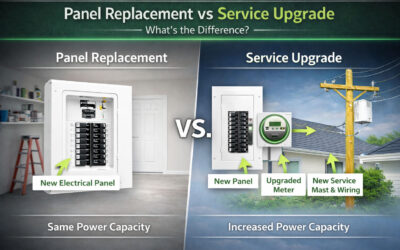
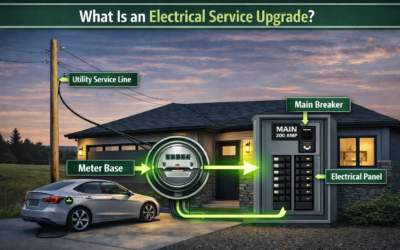
A surge protection device is installed directly at your electrical panel. That’s the point where electricity enters your home and gets distributed to everything inside. If your current system is struggling to keep up with modern demands, you may also want to consider panel and service upgrades to ensure your home is powered safely and efficiently.
When a surge comes in, whether from outside or generated internally, the device intercepts it and diverts the excess energy safely to the ground before it can travel through your system.
You can think of it as a first line of defence.
It doesn’t replace power strips. It works alongside them. The whole-home system handles the big threats at the source, while point-of-use protection (like power strips) can help manage smaller, localized spikes.
Together, they create a layered approach that actually makes sense.
Why Whole-Home Surge Protection Matters in the Lower Mainland
Not every region faces the same electrical conditions, and the Lower Mainland has a few factors working against it.
We deal with frequent storms, heavy rainfall, and wind events that can impact power lines and infrastructure. Even when outages don’t happen, fluctuations often do.
Neighbourhood density also plays a role. Shared transformers and increased demand from surrounding homes can create instability in the system, especially during peak usage times.
On top of that, homes today are more connected than ever. Smart thermostats, lighting systems, home automation, security cameras, and home offices all depend on stable power.
And in many areas, there are still older homes with electrical systems that weren’t designed for this level of demand.
Put all of that together, and you’ve got an environment where small, repeated surges are more common than people think, and where the cost of damage is higher than it used to be.
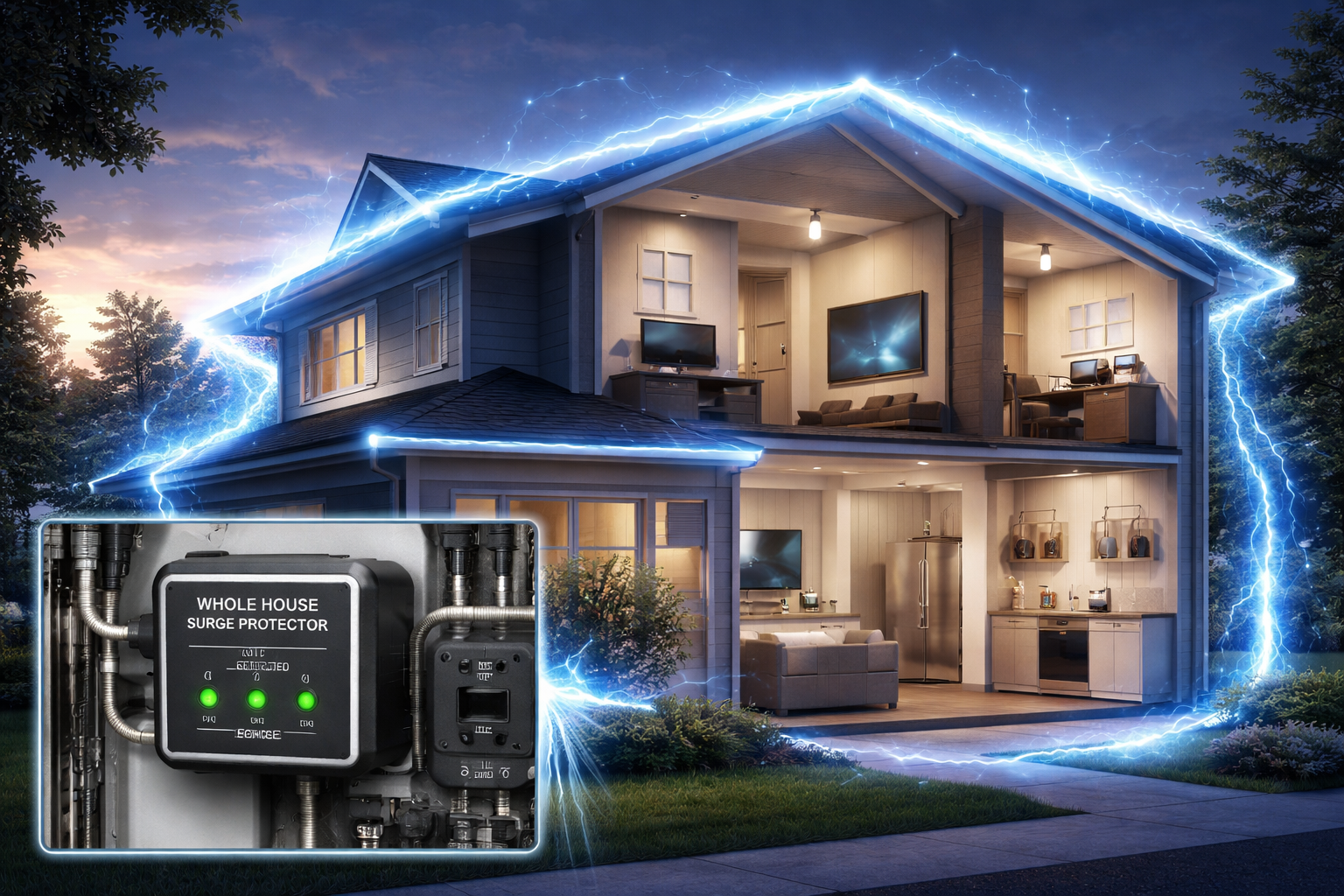
What Does Whole-Home Surge Protection Actually Protect?
This is where the difference becomes really clear.
A properly installed whole-home surge protection system helps protect:
- Major appliances like your refrigerator, stove, washer, and dryer
- HVAC systems, including furnaces and heat pumps
- Your electrical panel and the wiring throughout your home
- Hardwired systems like garage door openers and security setups
- Sensitive electronics across your entire home, not just in one room
It’s not just about preventing a single catastrophic event.
It’s also about reducing the ongoing wear and tear caused by smaller, repeated surges that slowly shorten the lifespan of your equipment.
What Happens If You Don’t Have Whole-Home Surge Protection?
Nothing… until something does.
That’s usually how it goes.
Maybe it’s a noticeable event, like a storm or a power outage followed by a surge. Suddenly something doesn’t turn back on, or it starts acting strangely.
Or it’s less obvious. Appliances start failing earlier than expected. Electronics don’t last as long as they should. Issues show up that are hard to trace back to a single cause.
Replacing a fridge, a heat pump, or a home office setup isn’t cheap. And while insurance may cover certain events, it often comes with deductibles, limitations, and plenty of fine print.
The bigger issue is that a lot of surge-related damage is cumulative. It doesn’t always show up right away, but it adds up over time.
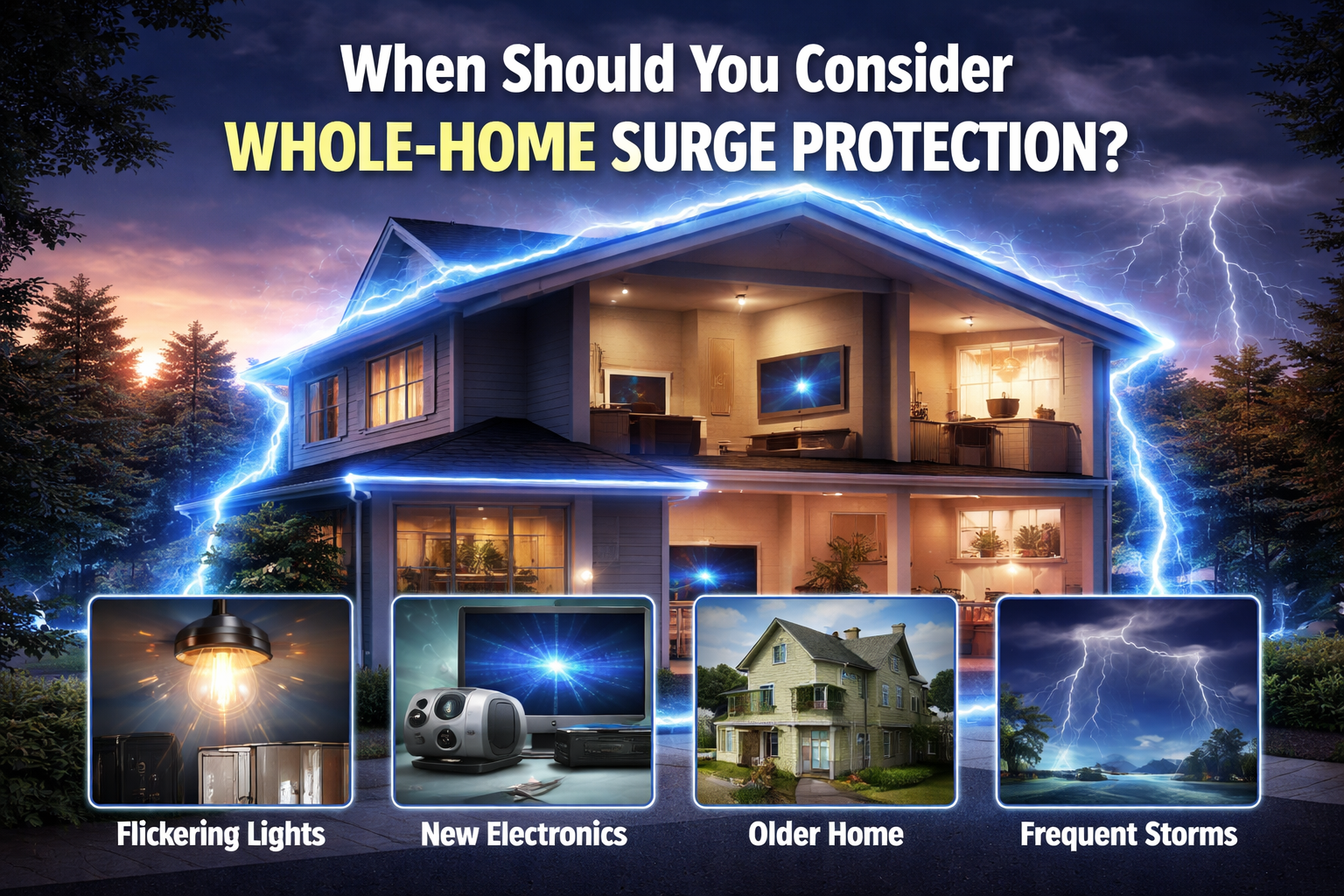
When Should You Consider Whole-Home Surge Protection?
If you’re wondering whether this is something worth looking into, there are a few situations where it makes a lot of sense.
If you’ve noticed flickering lights, experienced recent outages, or live in an area that sees regular storms, your home is already dealing with fluctuations.
If you’ve upgraded your appliances, added a home office, or invested in smart home technology, you’ve increased what’s at risk.
If your home is older, or you’re not sure when the electrical system was last updated, it’s worth having a professional take a look.
And if you just want to avoid dealing with preventable problems down the road, this is one of those upgrades that quietly does its job in the background.
Why Professional Installation Matters
This isn’t something you want to guess your way through.
Whole-home surge protection needs to be installed at your electrical panel, which means working directly with the core of your home’s electrical system.
A licensed electrician will make sure the device is properly installed, correctly grounded, and compatible with your existing setup. They can also spot any underlying issues that could affect performance or safety.
It’s a relatively straightforward upgrade when done properly, but it’s not a DIY situation.
The Bottom Line: A Smarter Way to Protect Your Home
Power strips still have their place. They’re useful, and they’re worth using for added protection at the device level.
But they’re not a complete solution.
Whole-home surge protection gives you a much broader level of coverage. It protects what you see, and a lot of what you don’t think about day to day.
In a place like the Lower Mainland, where electrical conditions can be unpredictable and homes are more connected than ever, it’s one of those upgrades that just makes sense.
Thinking About Protecting Your Home from Unexpected Surges?
If you’re not sure what your home currently has in place, or whether whole-home surge protection is the right fit, it’s worth having a conversation.
A quick assessment can give you a clear picture of your setup and what makes sense for your home, without any guesswork.
And if everything already looks good, at least you’ll know for sure.
Either way, you’re making a smart call by looking into it.