Are you being told you need a new electrical panel—but not sure if that’s the same as upgrading your service? Wondering whether you’re about to spend money on the wrong solution for your home’s electrical needs?
In this post, we’ll clearly break down the difference between a panel replacement and a full service upgrade so you can make the right call with confidence.
You’ll learn what each service actually includes, when you need one versus the other, and what’s involved behind the scenes—especially here in BC with current code and BC Hydro requirements.
It’s a common misconception: panel replacement and service upgrade are often used interchangeably, but they are not the same thing. While both involve your electrical system, they solve very different problems.
What Is a Panel Replacement?
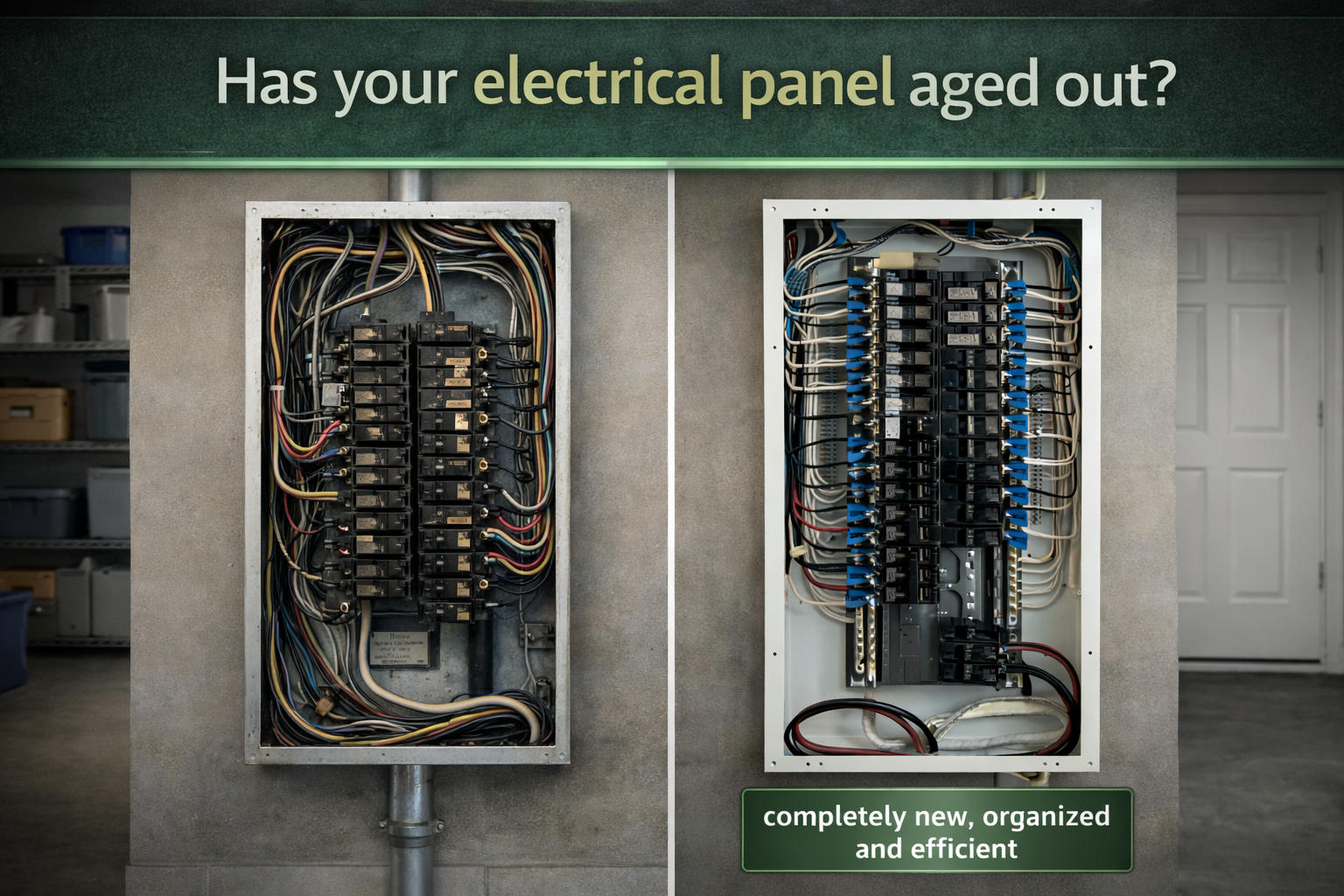
A panel replacement is exactly what it sounds like—removing your existing electrical panel and installing a new one, typically in the same location and with the same amperage.
Like most equipment and appliances in your home, electrical panels have a lifespan. Over time, components wear out, breakers become unreliable, and older panels may no longer meet modern safety standards.
A panel replacement is usually recommended when:
- The panel is outdated or nearing end of life
- Breakers are failing or not tripping properly
- There are signs of heat damage, corrosion, or wear
- You want to improve safety without increasing capacity
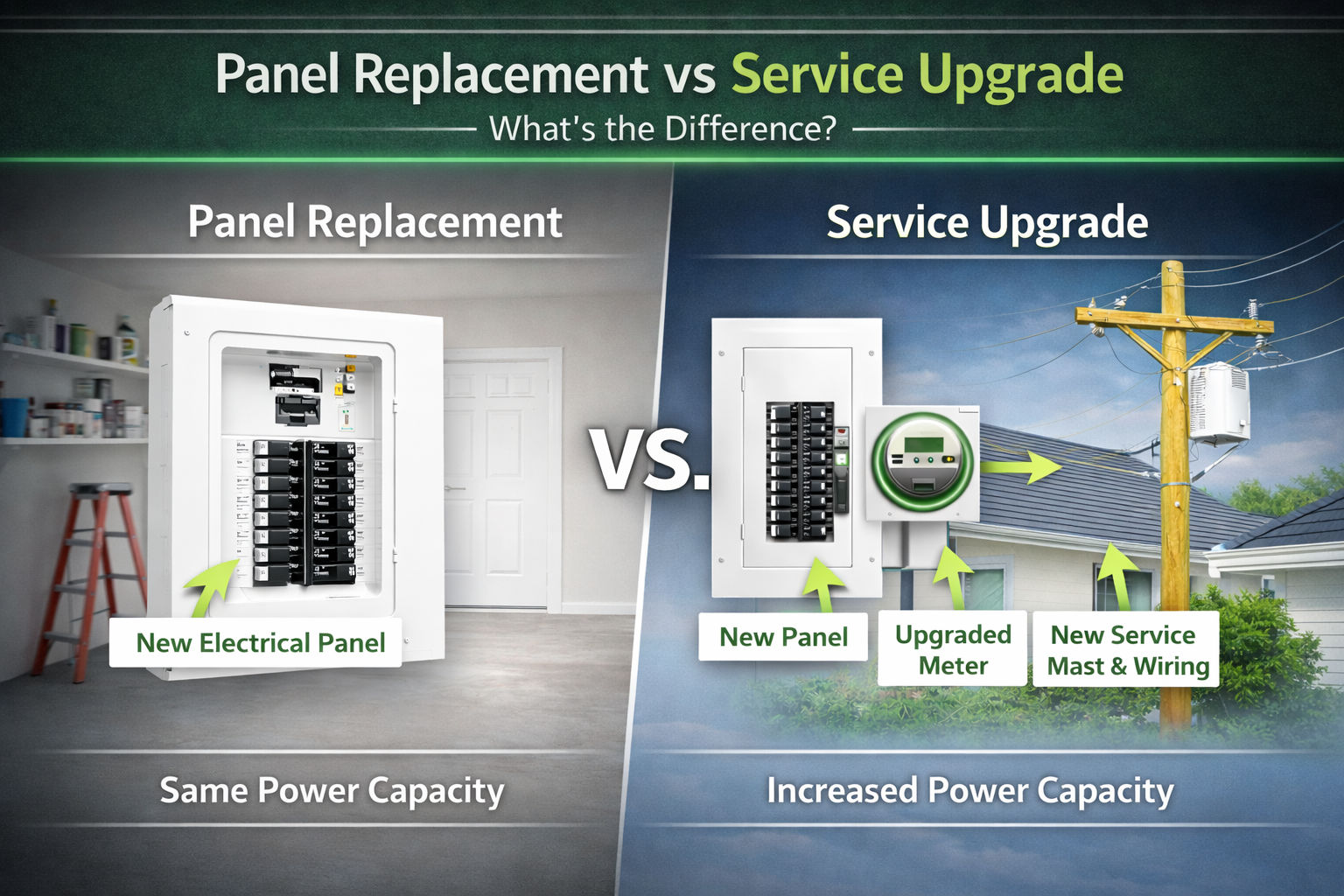
It’s important to note that a panel replacement does not increase the amount of power your home can use. If you have a 100-amp service, you’ll still have 100 amps after the replacement.
Even though it’s “just” a replacement, this work still requires permits and inspections to ensure everything meets current electrical code.
Think of it as replacing an aging component with a safer, modern version—without changing the size of your electrical supply.
What Is a Service Upgrade?
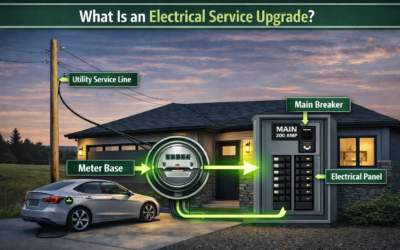
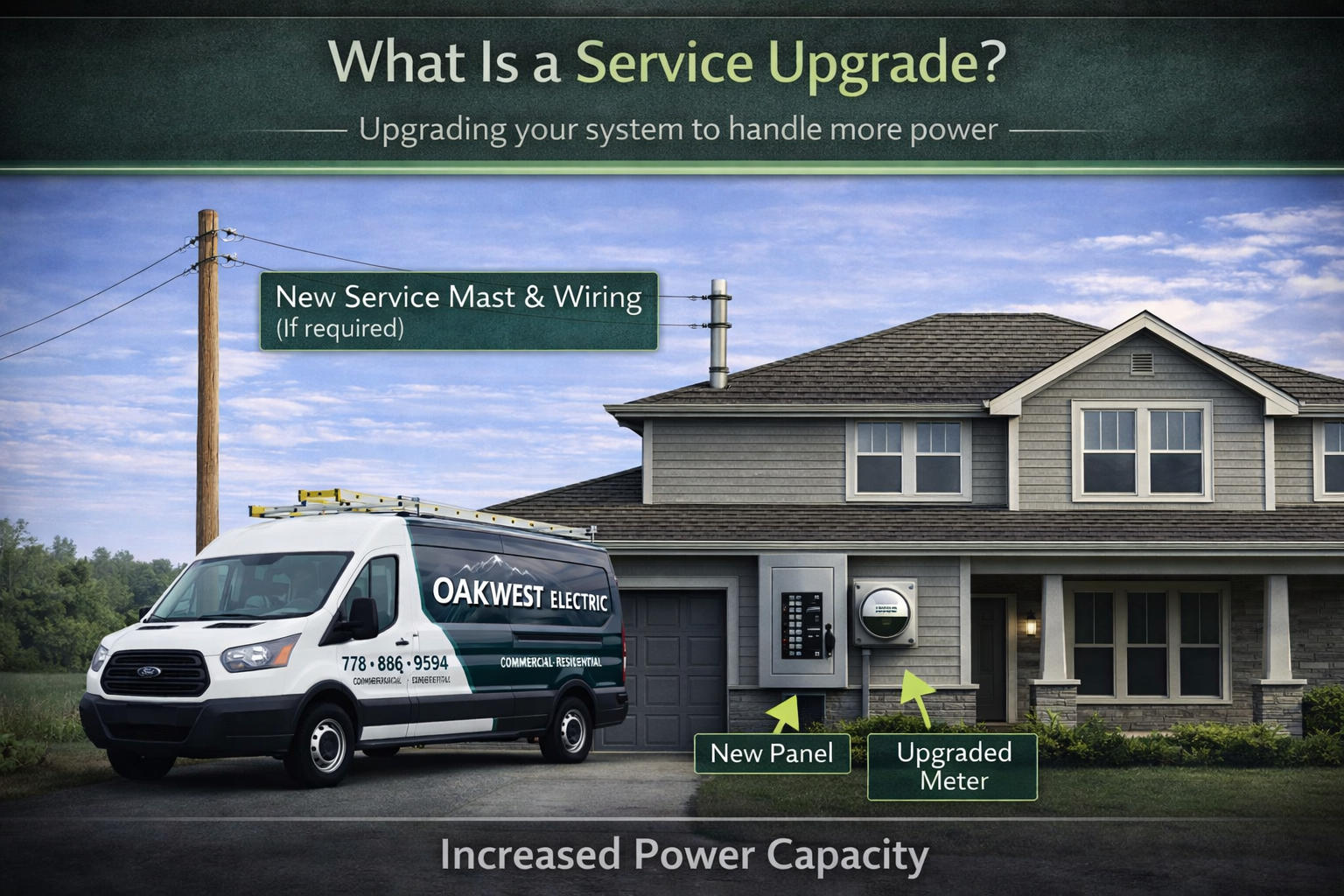
A service upgrade is a much more involved project. It increases the total electrical capacity of your home—most commonly upgrading from 100 amps to 200 amps.
This isn’t just a panel swap. A proper service upgrade typically includes:
- Installing a new 200-amp electrical panel
- Upgrading the meter base to handle 200 amps
- Replacing or modifying the service mast for overhead services
- Upgrading to 3″ conduit for underground services (in many cases)
- Coordinating disconnect and reconnect with BC Hydro
Depending on your property and BC Hydro’s current requirements, a service upgrade may also involve:
- Relocating the meter to meet updated placement standards
- Installing a service pole on your property to comply with utility guidelines for service routing and meter location
In other words, a service upgrade doesn’t just modernize your equipment—it changes how power is delivered to your home.
Key Differences at a Glance
The simplest way to separate the two:
- Panel Replacement = New panel, same capacity
- Service Upgrade = New panel + increased capacity + utility-side changes
Panel replacements focus on safety and reliability, while service upgrades focus on capacity, compliance, and future-proofing.
A panel replacement may be the right choice if:
- Your current service size still meets your needs
- The issue is age, condition, or safety of the panel
- You’re not planning major electrical additions
A service upgrade is likely the better option if:
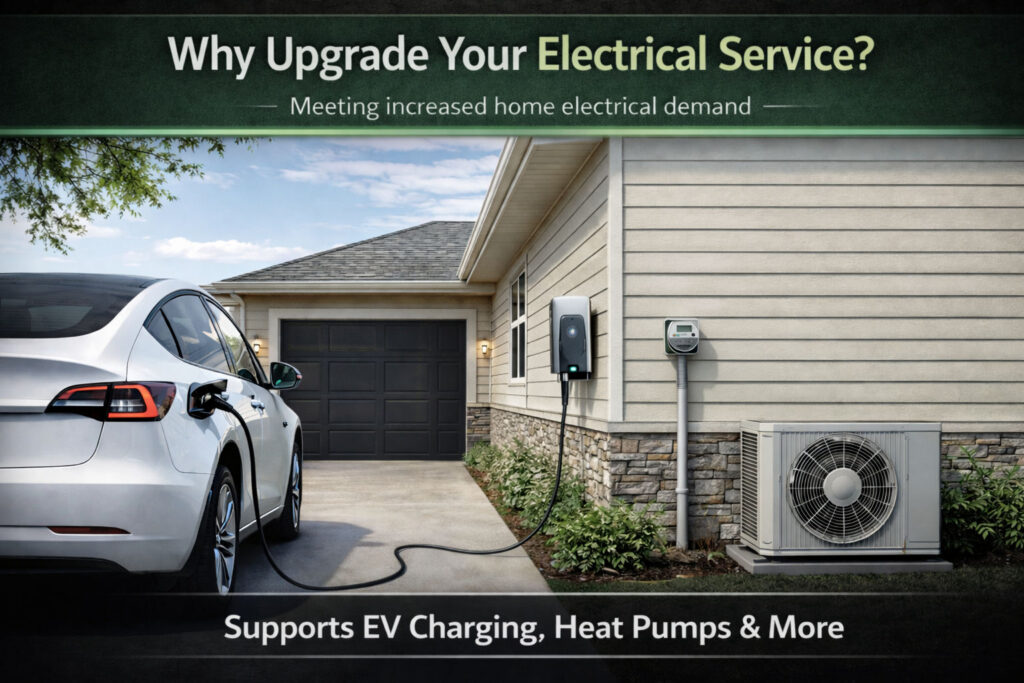
- You’re adding high-demand loads (EV charger, heat pump, electric heating)
- Your home is running out of capacity or breaker space
- You have an older 60-amp or undersized service
- You want to plan ahead for future electrical upgrades
In many cases, homeowners initially ask for a panel replacement—but once their goals are considered, a service upgrade makes more sense long-term. BC Hydro provides excellent advice to homeowners about understanding their electrical capacity.
Why This Decision Matters
Choosing between a panel replacement and a service upgrade isn’t just about cost—it’s about doing the job right the first time.
Replacing your panel without increasing capacity can leave you limited down the road. On the other hand, upgrading your service unnecessarily can add cost without real benefit.
The key is understanding what problem you’re actually trying to solve: equipment condition, or electrical capacity.
Final Thoughts
A panel replacement and a service upgrade might seem similar, but they serve completely different purposes.
If you’re unsure which one your home needs, the best step is a professional assessment. At Oakwest Electric, we help homeowners understand their options and make the right decision based on both current needs and future plans.