
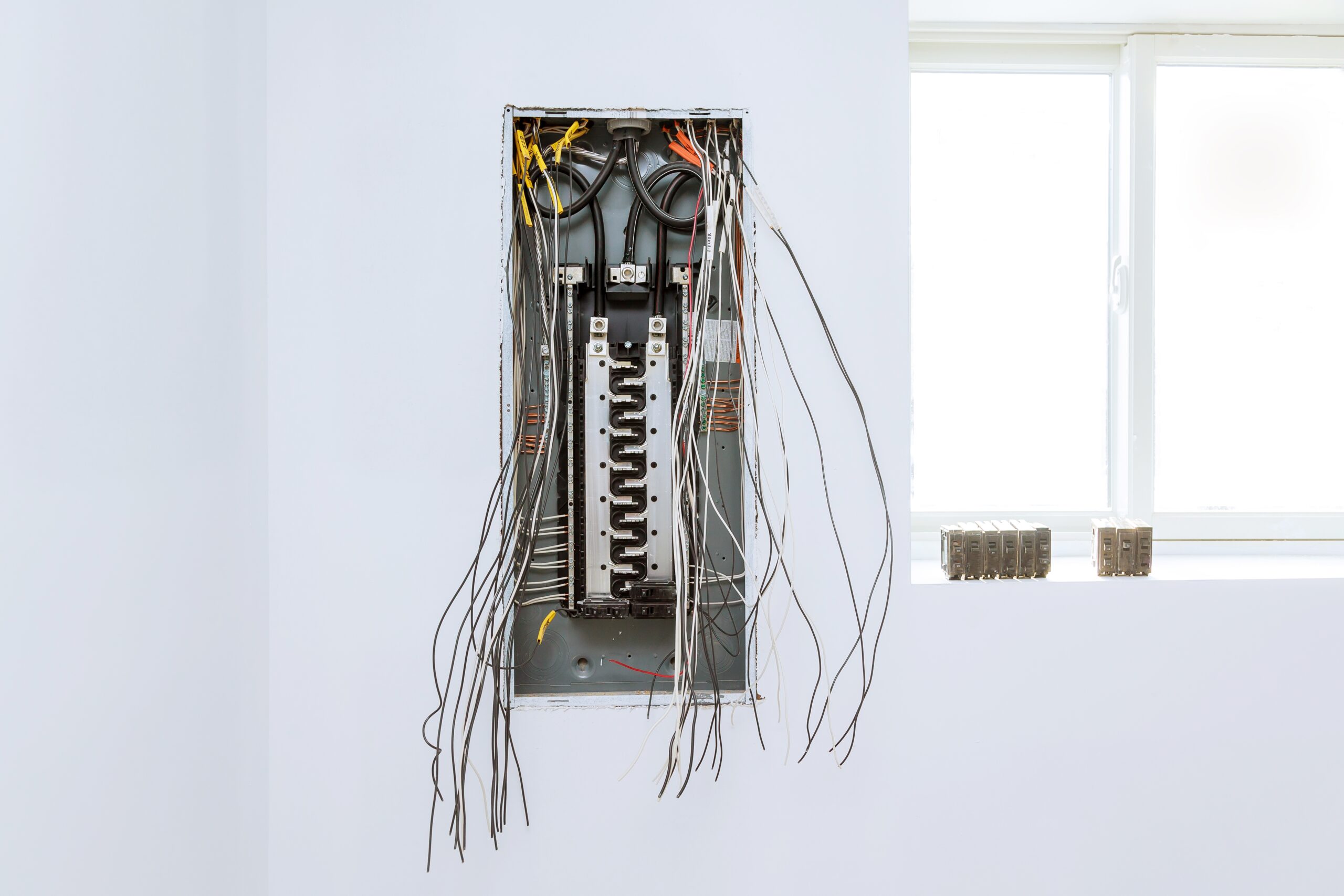
If you’ve lived in your home long enough, you already know the truth most people don’t like to admit: electrical problems don’t magically go away. They don’t “fix themselves,” they don’t sort it out overnight, and they definitely don’t stop being a problem just because you’re busy.
They whisper first. Then they start raising their voice. And eventually, if ignored long enough, they make their presence known in the worst possible way.
This is exactly why residential electrical warning signs matter. Not in a “scare you” sort of way, but in a let’s be realistic way. Small electrical annoyances almost always point to something deeper, and the sooner they’re caught, the easier — and safer — the fix is.
At Oakwest Electric, we handle our fair share of emergency calls across Langley, Surrey, Aldergrove, and White Rock. We’re here when something burns, snaps, trips, or shuts your home down at the worst time. But if there’s one thing we’ve learned from years in the field, it’s this: most electrical emergencies start as tiny signs homeowners shrugged off for months.
So think of this as a friendly, no-pressure walk-through of the early indicators that your home is trying to tell you something. You’ve probably seen one or two of these already — you just didn’t realize they were residential electrical warning signs worth paying attention to.
1. When Your Outlets Stop Holding On
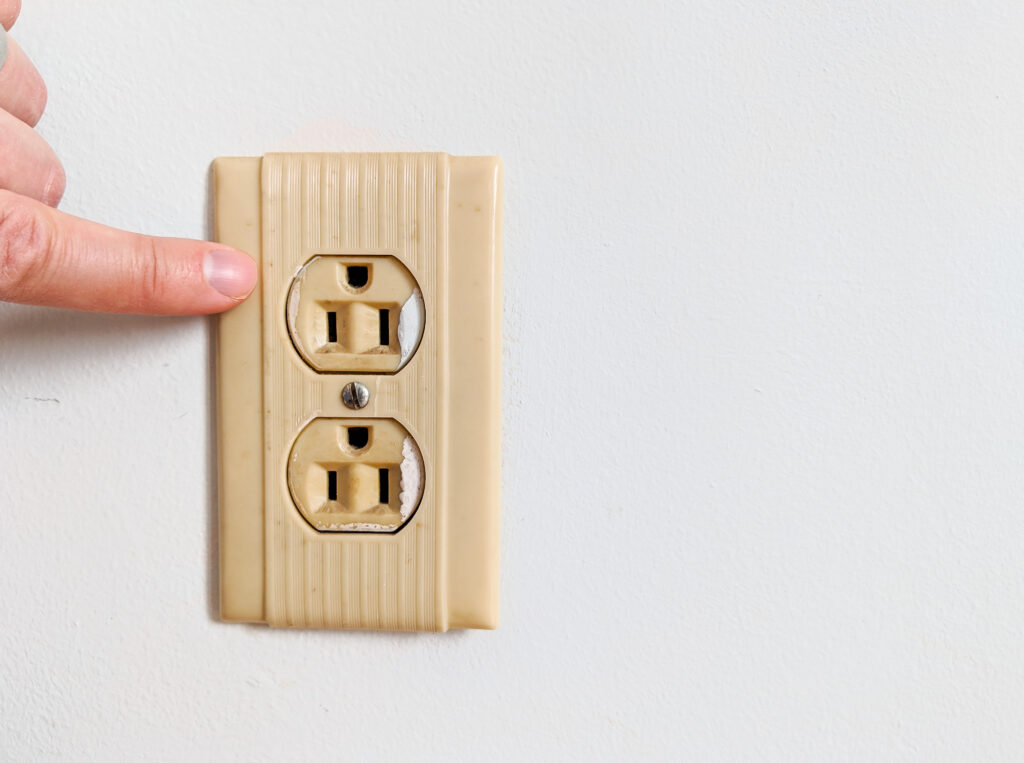
You know that outlet in the hallway that hasn’t held a plug properly since… who even remembers when? The one that spits out chargers, droops, or seems to let go the moment you walk away?
It seems harmless. Annoying, sure, but harmless.
But from an electrician’s point of view, that loose outlet is basically a weak handshake with electricity. Behind it, the wiring is shifting every time the plug moves. Every shift can loosen a connection, and loose connections create heat. Heat creates arcing. And arcing is one of the top causes of electrical fires in residential homes.
Most people don’t think of this as one of the major residential electrical warning signs, but it absolutely is. Cracked faceplates, plugs that wobble, and outlets that feel like they’re “giving out” are your home’s way of telling you the connection behind the wall isn’t as tight as it should be.
Sometimes the fix is as simple as replacing the outlet. Sometimes we find a deeper issue inside the box. Either way, it’s a small problem that shouldn’t wait.
2. That Faint Smell of Burning Plastic
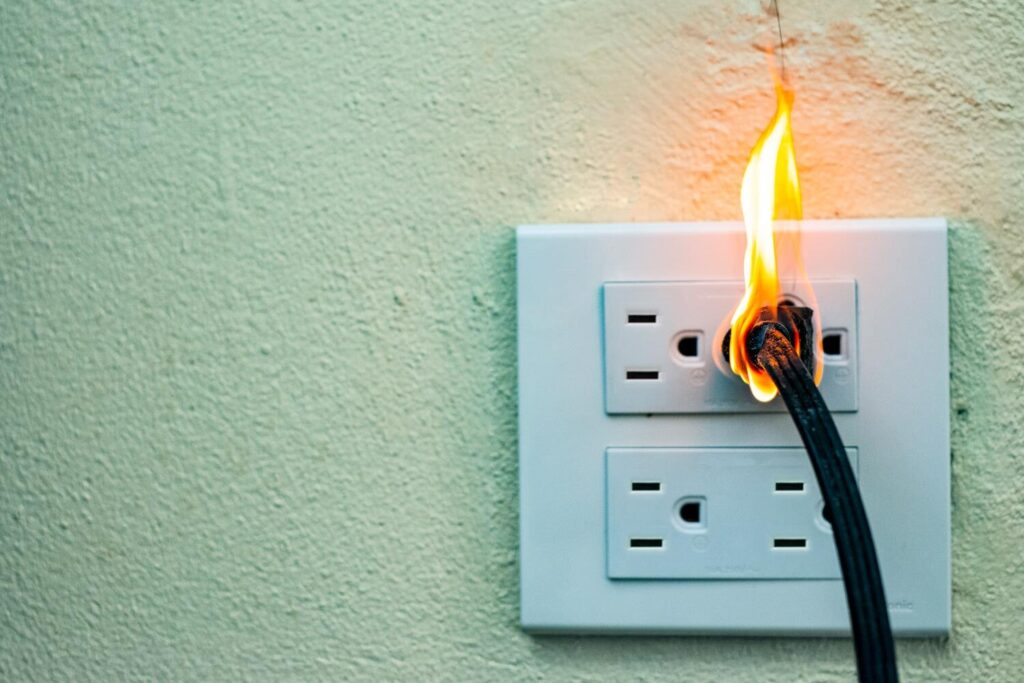
If you’ve ever walked past an outlet and caught the slightest smell of something… “hot”? Maybe a hint of burnt plastic, or melted insulation? And maybe it was faint enough that you convinced yourself you imagined it?
We hear this story all the time.
Here’s the uncomfortable truth: when something electrical smells burnt, it is burnt. Something overheated. Something began melting. Something got hot enough to release that smell into the air — even if you can’t see visible damage yet.
Of all residential electrical warning signs, this is the one that’s never optional. That smell is your early alert. It’s your home waving a flag. It’s the one time we’ll say, without sugarcoating it: if you smell burning around an outlet, appliance, or your panel, stop using that circuit and call someone.
Sometimes the fix is a loose connection. Sometimes it’s overloaded wiring or a failing breaker. Sometimes it’s insulation that cooked just enough to tell you something bigger is coming.
People often say, “But it only smelled like that once.”
Exactly. That’s how electrical issues start — quietly.
3. The Breaker That Just Won’t Stay On
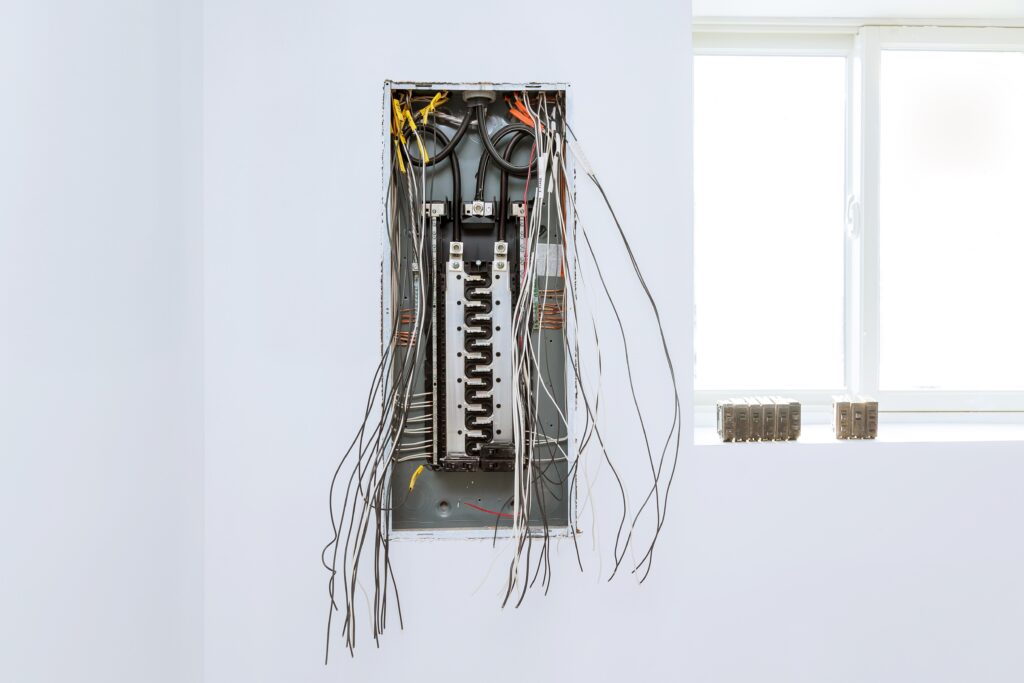
Breakers trip. That’s their job. But when they start tripping regularly — or worse, immediately after you reset them — something is up.
Think of a breaker like a referee. It steps in when the circuit is overloaded, or when something unsafe happens behind the scenes. And when it trips repeatedly, it’s not being dramatic — it’s protecting your home from a potential fire.
A repeatedly tripping breaker is one of the “classic” residential electrical warning signs, but it’s also one of the most misunderstood. Homeowners often assume:
- “It’s probably just too many appliances.”
- “It always does this when the space heater is on.”
- “If I force it a few more times, it’ll eventually stay.”
But breakers don’t trip because they’re annoyed. They trip because the wiring or the load is unsafe.
Sometimes the culprit is an appliance going bad. Sometimes it’s a short. Other times the entire circuit is simply carrying more than it was designed for in the first place — which is common in older Langley and Surrey homes that were never built with today’s electrical demands in mind.
The fix isn’t guessing. The fix is figuring out the real reason the breaker is protecting you so aggressively.
4. Flickering Lights — Especially When Something Else Turns On
There’s flickering you can chalk up to a cheap bulb, and then there’s flickering that tells a different story.
If your lights dim or flicker when the furnace starts, the microwave hums, or someone turns on the vacuum, that’s not a bulb problem. That’s your electrical system adjusting to a sudden load — and not handling it gracefully.
In the field, this is one of the most telling residential electrical warning signs we see. It often points to a loose or failing connection in the main panel, or even at the service point where your home ties into the utility line.
A weak or unstable neutral connection can cause voltage swings that are subtle enough to go unnoticed — until your electronics start behaving weirdly or stop working altogether.
You don’t need to know the physics behind it. Just know this: if your lights consistently dip when larger appliances turn on, your home is revealing an imbalance in its electrical system.It’s not urgent in a terrifying way, but it is something that should be checked out. And when we catch it early, the fix is usually simple.
5. When “Little Issues” Start Adding Up
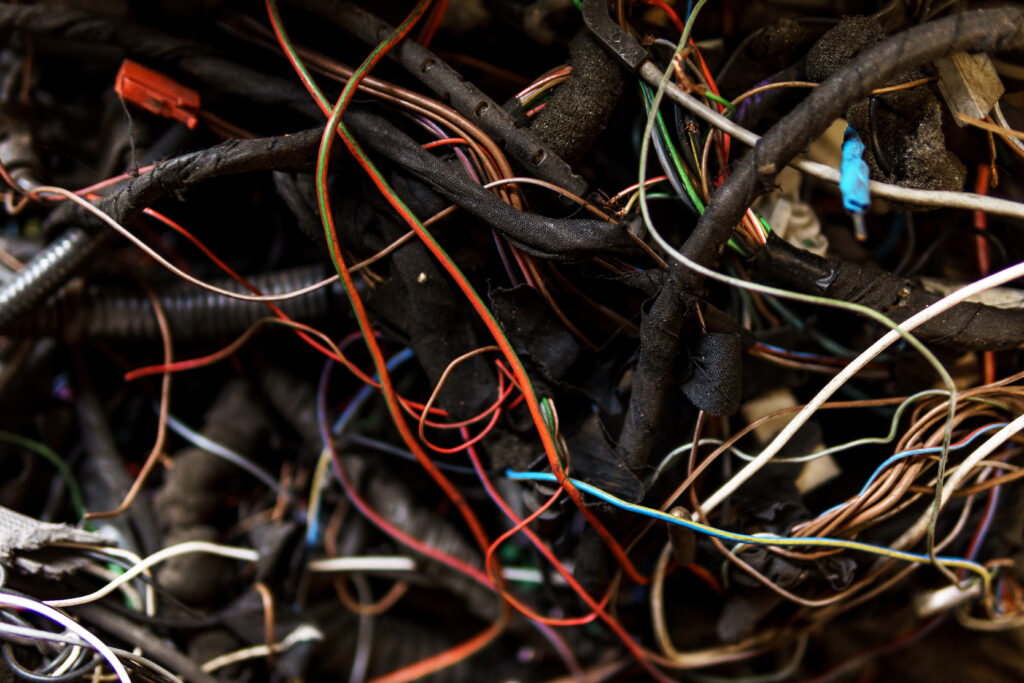
Sometimes, the most important residential electrical warning signs aren’t dramatic at all. They’re subtle. A light switch that crackles for a split second. A breaker that feels warm to the touch. An outlet that buzzes once in a while. A dim light in one room, even though the bulb is new.
Individually, these seem harmless. But in our experience, they tend to stem from the same two root causes:
- Loose connections
- Overloaded circuits
Homes age. Wiring ages. Electrical loads grow every year. What used to be a simple circuit feeding a couple of lights now feeds TVs, chargers, laptops, gaming consoles, smart home devices, heat pumps, and whatever else we plug in without thinking twice.
Your home is doing more than ever, and sometimes it’s doing more than it was originally designed to handle.
This is where homeowners often tell us,
“Nothing seemed wrong — until suddenly everything was wrong.”
And that’s exactly why these small signals matter.
Why Catching These Signs Early Actually Matters
Here’s the thing: most homeowners only call an electrician when something stops working altogether. A dead outlet. A full power outage. A breaker that gives up completely.
But the real value — the thing that saves money, headaches, stress, and potentially real danger — is paying attention to the signs before the system hits the breaking point.
Not because you should be anxious about your wiring.
Not because you should be “on alert” 24/7.
Simply because homes talk. And if you know what to listen for, you can prevent bigger problems long before they happen.
An electrician’s job isn’t just fixing things. It’s interpreting the story your electrical system is telling you. Loose outlet? Early wear. Burning smell? Overheating. Tripping breaker? Overload or failure. Flickering lights? Connection issue. All of these are the electrical equivalent of your home clearing its throat before it starts coughing.
When people start learning to spot residential electrical warning signs, something interesting happens: they stop calling in a panic, and start taking control of their home’s long-term safety. They get ahead of the problems instead of chasing them.
That’s when maintenance becomes a routine, not a crisis.
And that’s when homes stay safer, calmer, and more predictable.
The Bottom Line
If you’ve seen any of these issues, you’re not alone. Most homeowners experience at least one of these residential electrical warning signs at some point — they just don’t recognize them until something major happens.
But once you know what they mean, you can act before the stress hits.
Whether you’re in Langley, Surrey, Aldergrove, White Rock, or anywhere nearby, Oakwest Electric is here for emergencies, absolutely. But we’re also here to help you understand your home, take the guesswork out of electrical issues, and keep small problems from becoming major ones.
Your home talks. We just help translate.
Ready to stop guessing and start knowing? Book your Home Electrical Safety Check today.